
Commentary: No Room For Secret Police In LA
We did not need another reminder that cops, politicians and their attorneys lie, but we got one.


It took the Los Angeles City Attorney’s office over a year and half to finally admit that there were never any undercover cops in the LAPD headshots release. Only now that the city is potentially liable for what could amount to millions of dollars, have they decided to use our argument to get themselves off the hook.
Now, that they failed to censor public records and had to pay $300,000 to settle the first lawsuit against the Stop LAPD Spying Coalition and myself.
Now, that they lost their second case against us, in an attempt to make us liable for those same damages they may have to pay to the 900+ unnamed cops who are still suing them.
LA City Attorney Hydee Feldstein Soto chose go after our first amendment rights and became LA city government’s embarrassment.
She should resign.
The LAPD and city attorney lied and changed the definition of "undercover" for over a year and a half, meanwhile the media just regurgitated their claims.
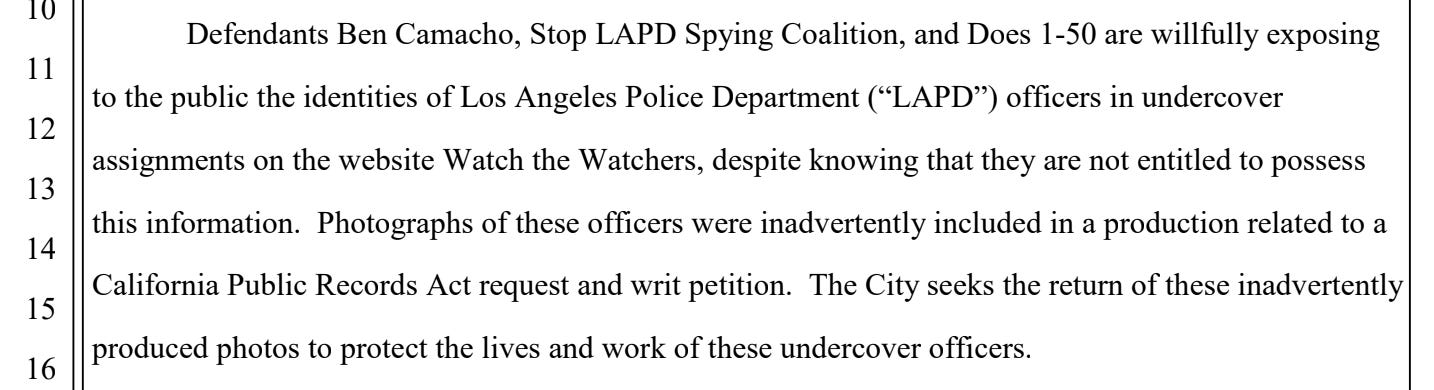
As if the public needed another reminder that the police, politicians and their attorneys lie.
The LAPD headshots saga is an example of what happens when community-based, radical transparency occurs in a city. Power structures get shaken, politicians point fingers, yet community members immediately recognize the value in the work.
Legacy media, complicit with the power structures that rubber stamp police violence, told the public these photos were leaked and implied the photos were not public records. In the Guardian’s coverage of the photo release, they even pointed to “highly classified military files” that, at the time, had been recently leaked.
The LAPD headshot photographs are public records. The roster released alongside the photos is a public record.
The way legacy media reported on the issue, paired with the lawsuits against me and the cop association’s complaints on TV, all tell me that they will do whatever they can to fight against real transparency and accountability.
And that’s exactly why I did what I did— it’s exactly why journalism matters.
Over a year later, reporters cite the database, neighborhoods know who to look out for, people in other cities have sought their police department’s headshots (successfully in at least one case), and even LAPD officers use the database to look themselves up. The value in knowing who is a cop in your community has become a key factor in organizing and accountability-oriented journalism.
That the city is now arguing what we have been arguing all along, against its own cops that it fought so hard to protect, is poetic justice.
The second case is still ongoing for the 900+ unnamed cops that are seeking damages from the city. In the past week, the attorneys for those cops gave out information that was essentially a map leading directly to those same cops’ identities. It was all information that was previously published, both by the public and LAPD itself.
No one hacked anything. No one accessed confidential information. The attorneys just told us where to go looking.
The next hearing is on November 18th. A judge will weigh whether to keep secret the names of those 900+ wannabe undercover cops, as well as possibly throw the whole case out.
Whatever the outcomes are, I’ll stand by this: there should be no room for a secret police force in Los Angeles or anywhere else in the southland.
“Namely, that none of these more than 900 Doe Plaintiffs are presently true full-time ‘undercover officers.’” -City of LA filing on 11/8/2024
Keep up the fight!