
LAPD Wants Permission To Shoot Journalists At ‘No Kings’ Protest, Press Lawyers Oppose
The city of LA wants to remove an injunction barring the LAPD from shooting journalists with kinetic weapons. Press attorneys are fighting to keep the protection in place.


Publisher’s note: This story is being co-published with Abraham Márquez’s Substack.
Update 10/17, 3:07PM: The judge denied the city’s motion to lift the injunction. LAPD is still barred from shooting journalists working at protests.
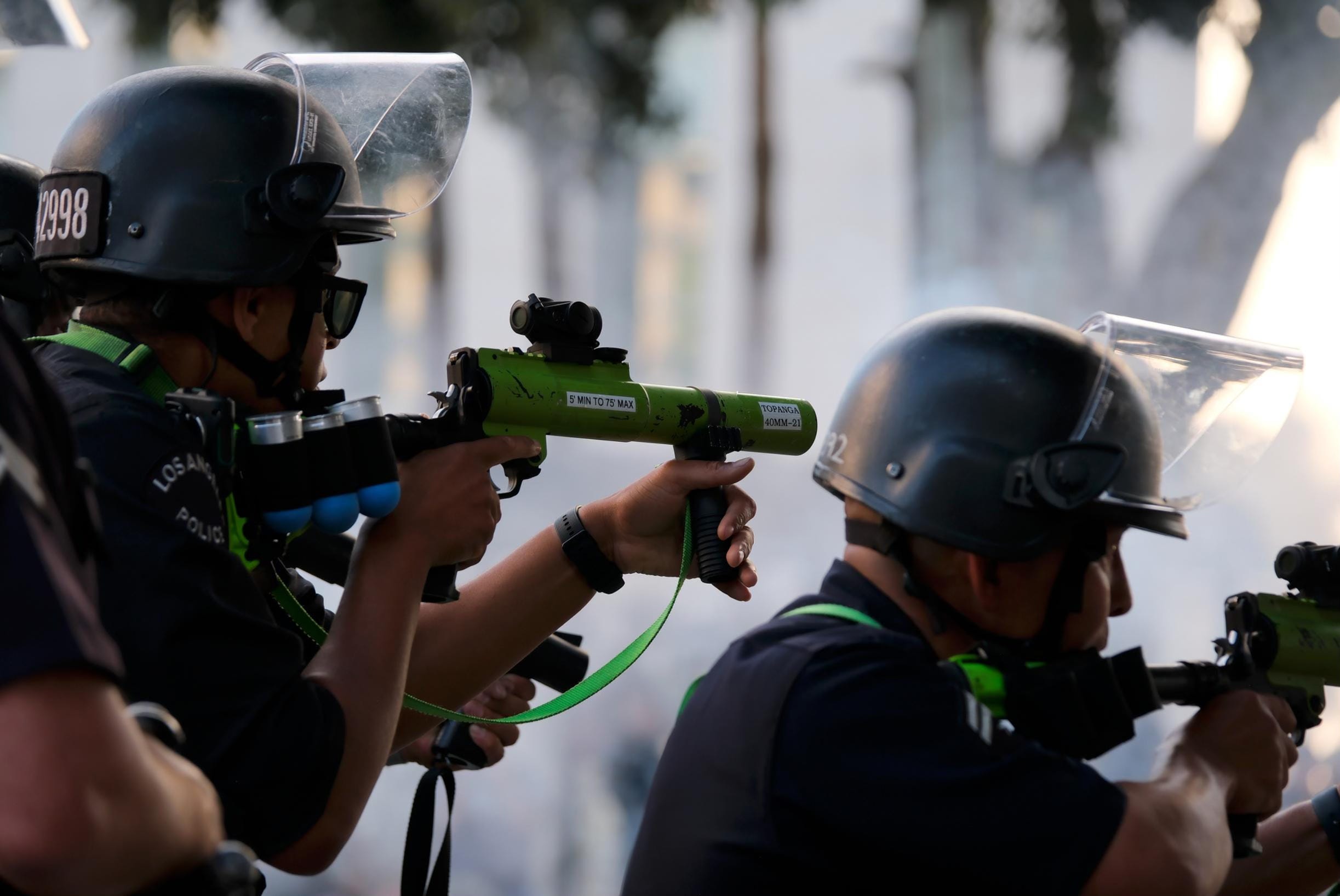
The Los Angeles Police Department (LAPD) wants to be able to legally shoot journalists with kinetic weapons at the “No Kings” protest this Saturday, according to court records filed on Wednesday. The city of Los Angeles is asking a federal judge to lift a preliminary injunction that forbids the LAPD from shooting journalists with kinetic weapons while reporting at protests.
The filings are part of a case filed by the Los Angeles Press Club (LAPC) and Status Coup against the city of LA and its police chief, Jim McDonnell. The case was filed after LAPD, along with the Los Angeles County Sheriff’s Department (LASD) and the Department of Homeland Security (DHS), used kinetic weapons against journalists covering protests against state-sanctioned kidnappings. LASD and DHS also used chemical weapons.
LAPC and Status Coup’s attorneys responded on Thursday with an opposition to the city’s filing. They argued that the city’s request for an emergency motion to lift the injunction is improper. They also argued that lifting the injunction – allowing LAPD to shoot journalists – is “contrary to the public interest.”
The first “No Kings” protest in LA took place on June 14th, with an estimated 30,000 people in attendance. Over 2,000 protests were held nationwide on the same day against Trump’s plan to cut social programs. Over 5 million people participated in a “No Kings” across the US.
LAPD also took to the streets in a show of force that resulted in violent repression against protestors and journalists. That day, videos showed the LAPD shooting at protesters indiscriminately.
The city’s filing argued that the injunction should be lifted because the LAPD cannot avoid using chemical and kinetic weapons against journalists when protests happen. LAPD Metropolitan Division Lieutenant Joseph Dunster, in his declaration filed alongside the city’s motion, explained that 40mm and 37mm kinetic weapons, as well as tear gas, cannot be used in a way that does not target journalists who are working at protests.
The city’s filing implied that the LAPD is not capable of determining who poses a threat. “Paragraph 3 bars the use of less-lethal munitions or chemical agents against journalists not posing an imminent threat,’ but provides no definition of ‘imminent threat’ or ‘objectively dangerous and unlawful situation.’”
Penal Code Section 409.7, which went into effect in 2022, states that police are not allowed to intentionally assault, interfere with, or obstruct duly authorized journalists at demonstrations. Despite these protections, dozens of journalists have documented being struck by crowd-control munitions in recent months while displaying their press badges or wearing marked Press vests. The lawsuit against the city and the LAPD chief was filed because the LAPD had repeatedly violated state law, and seemingly their own policies, by shooting journalists who were covering the protests.
The injunction came after lawyers for LAPC and Status Coup presented the court with various instances of LAPD’s pattern of brutalizing reporters with less lethal munitions.
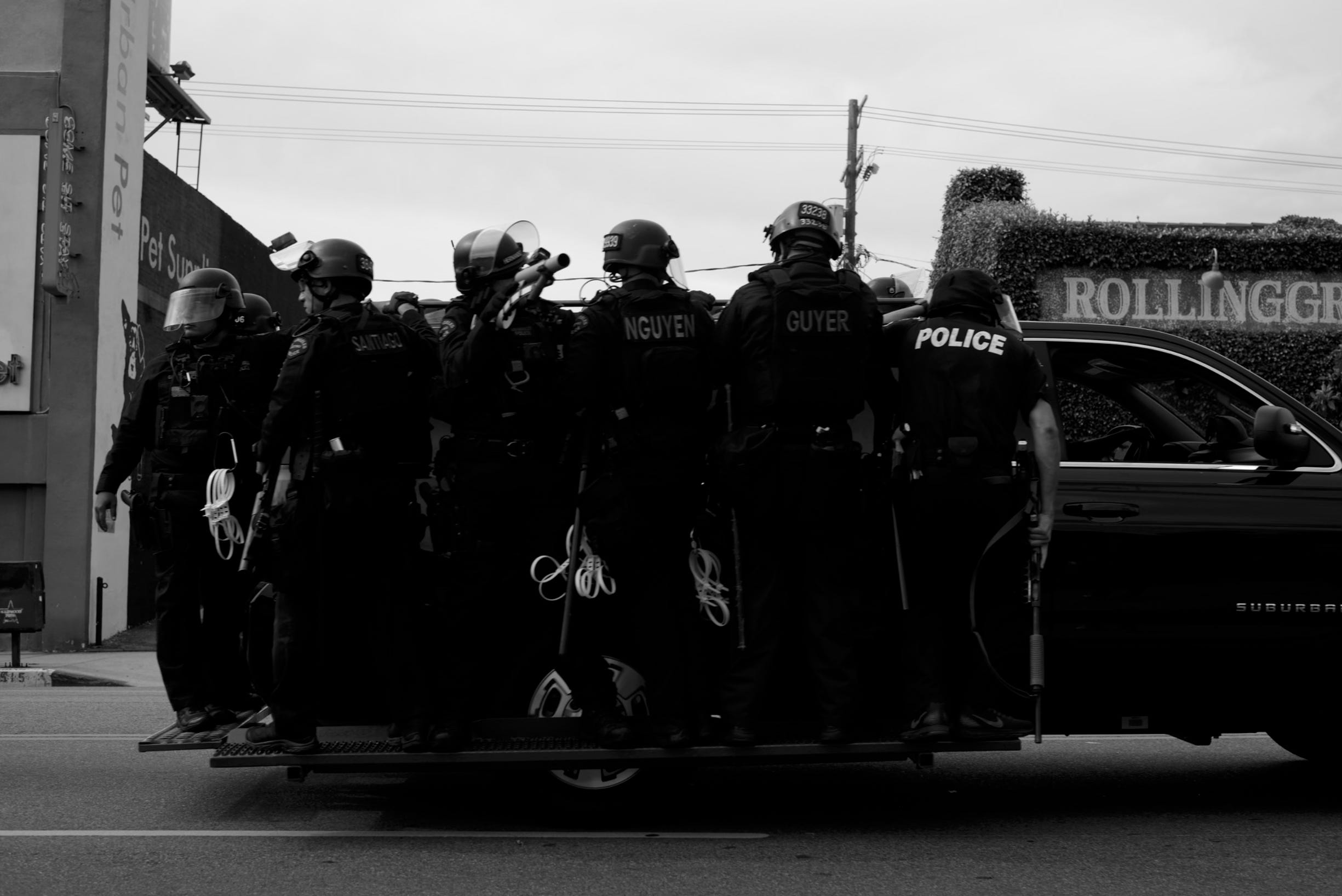
The city’s motion challenges previous court rulings that limited police from targeting or obstructing journalists and media workers, such as camera operators, during protests. Those rulings, in the past ten months in cities like Paramount, Compton, Los Angeles, and Portland, were meant to protect journalists under the First Amendment after multiple documents and evidence showed that journalists were targeted by law enforcement with rubber bullets, tear gas, or arrests while clearly identifying themselves as press.
In the filing, the city argued that the injunction, which restricts LAPD from shooting journalists, endangers officers and hinders their ability to maintain “order” during “chaotic conditions.” Another claim is that in large protests that move through the city, it is often impossible to distinguish between civilians and members of the press, especially at night when journalists are “embedded” among the crowd. Journalists wear credentials, have cameras, lights, patches, and other equipment that distinguishes them in a crowd of protestors.
The city aims to loosen the rules governing the use of “less-lethal” weapons, allowing officers to use them if they perceive an imminent “threat,” regardless of whether the press is present. This justification is also used when police officers kill someone. Police often claim that they fear for their lives when shooting someone, no matter what profession the person has. In 2017, USA Today reported that the justification is the “best cop excuse”, after the killing of 17-year-old Laquan McDonald.
This comes on the heels of nearly five months during which immigrant communities have seen unmarked cars with masked men kidnapping people under the orders of Immigration and Customs Enforcement (ICE), with the full support of the Trump Administration, while Mayor Karen Bass struggles to catch up with responses to the federal actions.
In a statement to LAist, Adam Rose, press rights chair for LAPC, said, “Instead of holding the department accountable, the city is spending even more money to hire an outside law firm so they can effectively beg a judge for permission to keep assaulting journalists for just doing their job. The mayor of Los Angeles needs to take charge here, and Bass has been completely absent.”
As the case continues, the outcome could determine whether journalists have some protection when reporting from the frontlines or whether documenting police actions during civil unrest will run the risk of retaliation by the institutions they aim to hold accountable.
This could send signals across the nation to other cities, police departments, and journalists covering the unrest, as the Trump Administration allocated more funding to ICE. In comparison, police departments continue to receive more funding from cities to occupy our public spaces and detain community members.
Despite the LAPD’s and federal government’s violent tactics against Angelenos, the mayor‘s statement focused on protestors needing to be “peaceful.” She included a veiled threat of police violence against protesters and press: “As always, the Los Angeles Police Department is expected to uphold those same rights — ensuring public safety while protecting the freedoms of expression and assembly and the rights of the press.”
At today’s council meeting, LA City Council voted unanimously to formally ask the city attorney to withdraw her motion that seeks to lift the injunction.
The opposition to the LAPD’s motion stated, “If the City can comply with Penal Code section 409.7, it can follow the injunction. And if it cannot — as its long-running history of using force on and denying access to journalists at protests and the Court’s factual findings show—the Preliminary Injunction is unquestionably necessary.”
Update 10/17, 9:40AM: A section from the opposition filing was added to the end of the article.
Update 10/17, 11:17AM: The article was updated with the mayor chiming in.
Update 10/17, 3:07PM: A section reflecting the city council’s vote to ask the city attorney to withdraw the motion has been added.